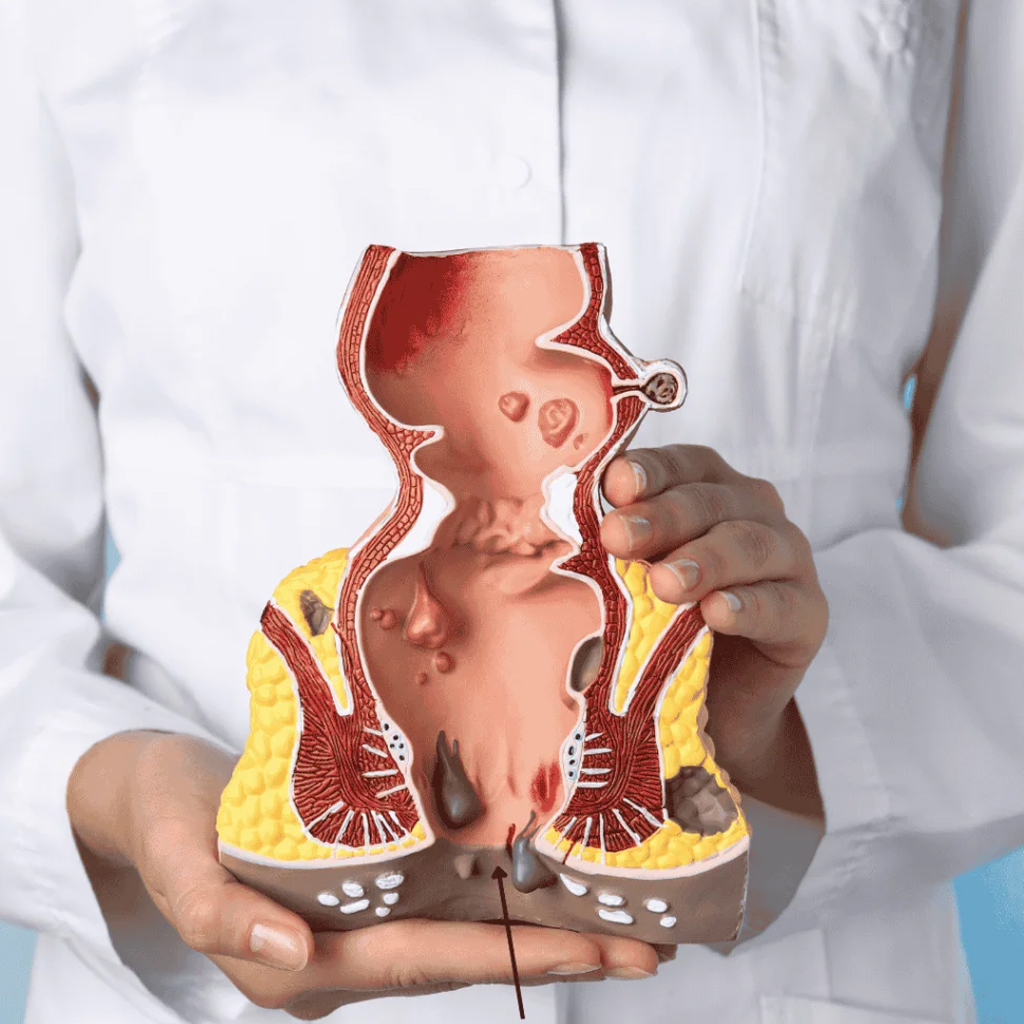
An anal fissure is a small tear or cut in the lining of the anal canal, often caused by passing hard or large stools. It leads to sharp pain during bowel movements, bleeding, and sometimes a burning sensation afterward. Anal fissures are common and can affect people of all ages.
Anal fissures are typically caused by trauma to the anal canal. Common triggers include:
Symptoms are often easy to identify and may include:
Sharp, burning pain during or after a bowel movement
Bright red blood on the toilet paper or stool
A visible tear or crack in the skin around the anus
A small lump or skin tag near the fissure (in chronic cases)
Itching or irritation in the anal region
Muscle spasms in the anal sphincter
A physical examination is usually sufficient. Dr. Protiva Talukdar may:
Visually inspect the anal area
Perform a gentle digital rectal exam (if tolerable)
Use an anoscope for internal inspection (in select cases)
Most acute fissures heal with home care:
High-fiber diet and adequate hydration
Stool softeners to prevent straining
Warm sitz baths (10–15 minutes, 2–3 times a day)
Topical anesthetics and pain relievers
Prescription ointments to relax the anal sphincter (e.g., nitroglycerin, nifedipine, or diltiazem)
For chronic or non-healing fissures:
Lateral Internal Sphincterotomy: A small cut in the anal sphincter to reduce tension and promote healing; highly effective and commonly performed
Botox Injections: Temporarily relaxes the sphincter muscle, allowing healing; suitable for patients who want to avoid surgery
Laser Fissure Treatment: Minimally invasive option using laser energy for faster healing and minimal discomfort
With her expertise in proctology and laser-based interventions, Dr. Protiva Talukdar offers personalized care for fissure patients—ensuring relief from pain, long-term healing, and minimal recurrence risk with advanced, patient-friendly techniques.
Expert in Ksharsutra Therapy & Proctology. Providing safe, effective, and compassionate care for anorectal conditions through Ayurvedic and laser-based methods.
